
From Low-Rise to Baggy: The Story of Y2K Jeans
Denim has always evolved alongside fashion, but few periods experimented with jeans as much as the late 1990s and early 2000s. Waistlines dropped, legs became wider, washes grew more noticeable, and decorative details transformed everyday denim into statement pieces.
Today, Y2K jeans are firmly back in the fashion conversation. Baggy silhouettes, low-rise cuts, faded washes, flared legs, and oversized proportions have all returned to contemporary wardrobes. While modern versions aren’t always identical to their early-2000s predecessors, their influence is unmistakable.
So, how did Y2K jeans develop, and why have so many of their defining features become popular again?
Low-Rise Jeans Become a Y2K Staple
Few denim trends are as closely associated with the early 2000s as the low-rise waist. After the higher silhouettes seen throughout previous decades, jeans gradually began moving lower on the hips during the late 1990s.
By the early 2000s, low-rise jeans had become a mainstream staple. The waistline appeared across several different cuts, including straight, bootcut, flared, and more fitted designs.
This also influenced the way denim was styled. Cropped tops and fitted T-shirts naturally complemented lower waistlines, while statement belts became much more visible. Rather than being purely functional, belts could feature rhinestones, oversized buckles, studs, or other decorative elements.
The low-rise silhouette remains one of the most recognisable characteristics of Y2K jeans today. At some points I was wearing a 5.5-6″ rise, which barely covered the back! It’s wild looking back at that, ha ha.
Baggy Y2K Jeans Bring Back Volume
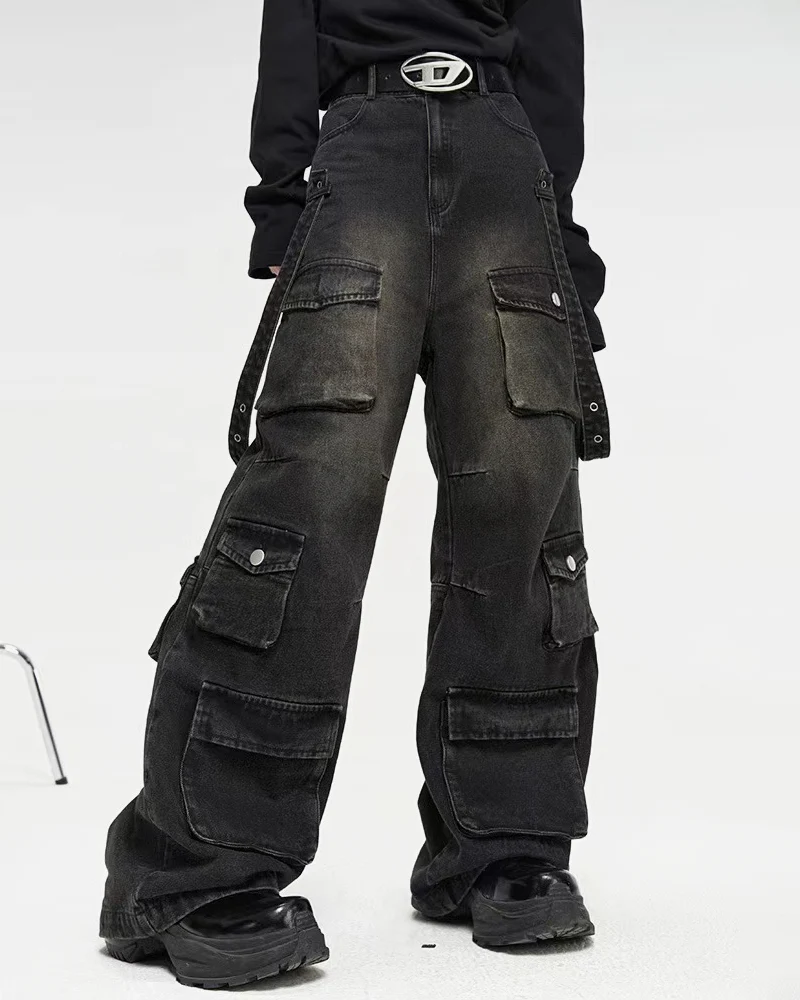
Not all early-2000s denim followed the body. At the opposite end of the spectrum, baggy jeans offered considerably more volume.
Oversized denim had already developed strong connections with hip-hop, skate, and streetwear culture during the 1990s. As the new millennium began, wider silhouettes continued to spread into mainstream fashion.
These jeans were often loose through the entire leg, sometimes falling over or stacking around the shoes. Instead of emphasising the body’s natural shape, the silhouette made proportion itself an important part of the outfit.
Modern baggy Y2K jeans follow many of the same principles. Their loose shape works particularly well with fitted tops, cropped jackets, sneakers, and other contemporary basics, which helps make the revival feel current rather than purely nostalgic.
For me, I am having nostalgia and loving it. Before I started wearing the major low-rise, tight jeans, I was very much a skater girl, similar to Avril Lavigne, so I’m very fond of it deep down!

Bootcut and Flared Jeans Define Another Side of Y2K Denim
Baggy jeans weren’t the only major silhouette of the period. Bootcut and flared styles were everywhere during the early 2000s.
Bootcut jeans typically remained relatively fitted through the thigh before widening slightly below the knee. Their shape made them particularly easy to wear over boots, although they were also frequently paired with heels and platform shoes.
Flared jeans pushed the same idea further with a more noticeable widening toward the hem. Although flares originated long before the Y2K era, their early-2000s interpretation often featured lower waists and distinctive washes (see Paris Hilton here).
This variety is important when defining Y2K jeans. There was never just one characteristic fit: baggy, bootcut, flared, straight, and fitted denim all played a role in the period, even if some are more noticeable than others.
Distressed, Embellished and Patchwork Denim
The early 2000s also transformed the surface of denim. Jeans didn’t simply come in different cuts; designers experimented heavily with washes, distressing, stitching, and decoration.
Faded thighs, whiskering around the hips, distressed sections, and cool washes became increasingly common. These treatments gave new jeans a deliberately worn appearance, and a few brands spring to mind for this.
Other Y2K jeans were considerably more decorative. Rhinestones, embroidered motifs, contrasting stitching, unusual pockets, patches, and graphic details could turn a basic pair of jeans into the focal point of an outfit.
Patchwork denim captured the experimental mood particularly well. Panels featuring different shades or washes created reconstructed-looking designs that stood apart from traditional blue jeans. Does anyone remember this?
Pop Culture Makes Y2K Jeans Iconic
The denim trends of the period were closely connected to early-2000s pop culture.
Music videos, magazines, television, and celebrity photography gave new styles enormous exposure. Low-rise jeans became closely associated with pop fashion, while hip-hop and streetwear continued to influence the popularity of baggier silhouettes.
Denim also suited the increasingly casual nature of celebrity style. A pair of jeans could be worn with a simple tank top during the day and transformed with heels, a statement belt, and a small shoulder bag for an evening look.
Because jeans appeared so frequently across popular culture, many specific cuts and styling choices became visual markers of the era. The lowest-rise bootcut jeans, that fit super tight, that was the peak era though!

Why Y2K Jeans Are Popular Again
For much of the 2010s, skinny jeans and higher waistlines dominated mainstream denim. Eventually, fashion began moving toward looser proportions again. Everything is cyclicle in fashion!
Straight-leg and wide-leg jeans provided the first major alternatives, followed by increasingly baggy silhouettes. At the same time, renewed interest in early-2000s fashion brought low-rise cuts, flares, distressed finishes, and decorative denim back into focus.
Social media also introduced the fashion of the period to a generation that may not have experienced it firsthand. Archived celebrity outfits, old music videos, vintage advertisements, and secondhand clothing all became sources of inspiration.
As a result, Y2K jeans started to feel less like outdated denim and more like an alternative to the cleaner, slimmer silhouettes that had dominated the previous decade. It’s funny being of an age now where I experienced a trend the first time around, so witnessing the resurgence is interesting.
How Y2K Jeans Are Worn Today
The current revival doesn’t require recreating an entire outfit from 2002. Instead, Y2K denim is often combined with contemporary wardrobe staples.
Baggy jeans can be balanced with a fitted tee or tank top. Flared denim works with simple knitwear, while low-rise jeans can be paired with a cropped jacket or oversized blazer. More decorative designs featuring patchwork, embroidery, or distressing generally work best when the rest of the outfit remains relatively simple.
This flexibility is one reason Y2K jeans have returned so successfully. The original era offered a wide range of silhouettes rather than a single strict formula.
From low-rise bootcuts to oversized baggy denim, early-2000s jeans were defined by experimentation. Today’s revival follows the same principle, taking recognisable Y2K details and adapting them to modern wardrobes. More than twenty years later, Y2K jeans are once again proving how quickly yesterday’s denim can become today’s inspiration.
